This web site supports Dr. Russell Sabella's work on educating children, parents, educators and other stake holders about the responsible use of technology. Included in these pages you will find helpful resources, lesson plans, links, and more.
Until last month, many adults who work in schools had probably never heard of an app nicknamed “Tinder for teens.”
But chilling interactions on that social networking platform—called Yubo—have surfaced between kids around the world and the 18-year-old who killed 19 children and two teachers at Robb Elementary School in Uvalde, Texas, last week.
Sameer Hinduja, Ph.D., is a Professor in the School of Criminology and Criminal Justice at Florida Atlantic University and Co-Director of the Cyberbullying Research Center. He is recognized internationally for his groundbreaking work on the subjects of cyberbullying and safe social media use.
For Safer Internet Day this year, ConnectSafely spoke to parents, educators and young people across the country to find out what’s on their minds when it comes to online safety and wellbeing in 2022. We took the questions and concerns — and a few of our own — to experts in online safety, parenting, bullying prevention, security, and executives at popular apps like Instagram, TikTok, and Roblox. The results were some great conversations with a wealth of advice and insights. To spark discussion at home and school, each video includes discussion prompts. We hope you’ll find these resources helpful for encouraging positive, productive discussions about online wellness on Safer Internet Day and all year long.
Parents and guardians have always had a powerful influence on the behaviors of children, while research is clear that peers tend to have more sway during the teenage years. That said, our new research published in the Journal of Child and Family Studies identifies that certain positive parenting practices have a strong effect on both school bullying and cyberbullying among middle- and high-schoolers in the US. These practices include a surplus of warmth, autonomy/support, and structure and a deficit of rejection, coercion, and chaos.
Read more:
The Role of Parents in Preventing Bullying and Cyberbullying - Cyberbullying Research Center
Transforming bystanders into "upstanders" is an effective strategy for bullying prevention. This collection of videos and resources will show students how to speak out when they see someone being bullied.
This October, for Bullying Prevention Month, empower kids by showing them how one person can make a difference when it comes to bullying. It takes courage to move from being a bystander, who is merely observing cruel behavior, to being an upstander, who speaks up against it. I've gathered some resources for you to help teach the kids in your life to be upstanders instead of bystanders, starting by simply choosing kindness and inclusion.
Ways Parents Can Encourage Positive Digital Behavior and Prevent Cyberbullying
As the weather cools and schools close for winter break, your child may spend more time inside. More time inside can mean more time online. Worried about the risks of cyberbullying? There are things you can do to encourage positive digital behavior in kids.
As a parent, you can create trust with your children by starting honest conversations. A discussion with your child is an opportunity to communicate values. Establish expectations about your family’s digital behavior and explain what is appropriate to view or share online. Make sure your child knows which apps can and cannot be used.
Make time to check in with your child about their experiences online. Talk to them about their interactions and address any risks of cyberbullying. Be clear that you are trying to look out for them and that you want to have open dialogue with them. Listen to their concerns and share your point of view.
To minimize the risk of cyberbullying or harm from digital behavior, parents can:
Set clear expectations about how to represent yourself and treat others online
Learn about the harmful effects of cyberbullying and potential legal issues, like hate speech and sexting
Be clear about what content can be viewed or shared
Identify which apps are appropriate for your child’s use and which are not
Limit the amount of time that a child can spend online or on their devices
Model positive, respectful digital behavior on your own devices and accounts
Executive Summary: Over four billion people worldwide are estimated to use social media by 2025. Though a majority of people use social media to engage with family and friends, people also use platforms and apps to obtain news and engage with …
Teaching Internet Safety to Young Kids: The National Center for Missing & Exploited Children has released season two of Netsmartz’s "Into the Cloud," a series of videos to educate children ages 10 and under about Internet safety. While season one addressed reporting unsafe and inappropriate interactions and content, season two addresses online exploitation, reporting and removing online inappropriate content.
Using Into the Cloud™
Each episode of Into the Cloud™ is between 3-6 minutes long, making them ideal for a variety of environments, from technology class to afterschool and home use.
Each episode has a corresponding discussion guide that can be used in one-on-one and small group settings.
Additionally, classroom activities on the themes of trust, identity, and reputation are available for use with the complete first season.
Keep kids engaged after the episodes with "Cloud Chaos!" the Into the Cloud™ game, available online and in the app store.
This Bullying Resolution page provides parents with insight to assist them in achieving an effective resolution of the more serious or chronic situations where their child is being repeatedly bullied or harassed. This service is for residents in Oregon. However, the information will be relevant in other states.
To make the most of the Internet, kids need to be prepared to make smart decisions. Be Internet Awesome teaches kids the fundamentals of digital citizenship and safety so they can explore the online world with confidence.
We have been exploring how young people use and misuse technology, with a primary focus on cyberbullying, for nearly two decades. In that time, though, we have almost exclusively studied middle and high school students (12- to 17-year-olds) and their caregivers. Earlier this year we were approached by the Cartoon Network with questions about tween experiences with cyberbullying. We knew we didn’t have any data on tween cyberbullying, and a quick search didn’t turn up any other research on this particular population. So, with support from the AT&T Foundation, we partnered with Cartoon Network to fill this important gap in knowledge. In June and July of this year we surveyed a nationally-representative sample of 1,034 tweens (9-12-year-olds) to find out more about their experiences with cyberbullying. Below is a brief overview of some of the key findings.
Abstract: Schools have been fighting cyberbullying through intervention programs, yet few interventions have been empirically evaluated. This study evaluates the effectiveness of a Safe Surfing anti-cyberbullying intervention program that is based on the theory of planned behavior in reducing bullying online and offline and improving student-perceived popularity and self-esteem. It was hypothesized that from pre- to post-intervention online and offline bullying rates will decrease; students’ negative perception of popularity will decrease; students’ self-esteem will increase, and; in classrooms where there has been a greater decrease in online and offline bullying following the intervention there will be a greater improvement in students’ negative perception of popularity and self-esteem. Data were collected from 1,550 students (53% males) in 3rd to 11th grades from 69 classes in 19 primary (68%), middle and high (32%) public schools in Israel. The students answered online questionnaires pre- and post-intervention. Results indicated a significant decrease in bullying online and offline post-intervention. Also, a significant improvement in perceived popularity and self-esteem was obtained among primary school students. The decrease in bullying online and offline was significantly associated with an improvement in perceived popularity and self-esteem. The study provides support for the positive role that school-based interventions against cyberbullying can have, and demonstrates that schools can make a difference in the way their students consume social networks. The findings also contribute to the debate about the co-occurrence between traditional bullying and cyberbullying. The findings may encourage school principals to approach peer victimization with a broader view and to develop intervention programs that capture students’ social experiences more holistically.
Read more: The effectiveness of safe surfing, an anti-cyberbullying intervention program in reducing online and offline bullying and improving perceived popularity and self-esteem | Aizenkot | Cyberpsychology: Journal of Psychosocial Research on Cyberspace
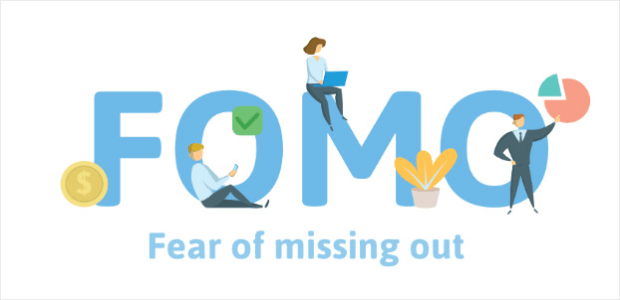
Abstract: The use of Social Network Sites (SNSs) has grown to become a ubiquitous aspect of daily life in developed countries throughout the world. This rise of social media has resulted in increased public concern regarding the way in which individuals engage with SNSs, and the consequences of frequent SNS use. The Fear of Missing Out (FoMO) is an example of a social psychological phenomenon which has recently received attention as a significant factor associated with experiences of SNS engagement. The following study sought to contribute to developing understandings of SNS use and FoMO. This was achieved by assessing the extent to which FoMO mediated the relationships between SNS engagement and four other psychosocial factors (psychological need satisfaction, social capital, public self-consciousness, and public self-monitoring). Quantitative data were collected from a student volunteer sample of 218 New Zealand SNS users and analysed using a series of regression analyses. Relationships between each of the assessed psychosocial variables and rates of SNS engagement were found to be mediated by FoMO. The findings of this study support the view that FoMO plays an important role in understanding the range of complex and interrelated psychosocial factors relating to rates of SNS engagement.
Read more:
Social network sites, fear of missing out, and psychosocial correlates | Classen | Cyberpsychology: Journal of Psychosocial Research on Cyberspace